

The National Historic Properties portfolio is one of the most interesting property portfolios in Ireland.
Owned by the State, and managed by the Office of Public Works, it’s a fascinating and diverse collection of castles, country houses, memorial sites and gardens, consisting of thirty two historic properties that are open to the public.
Many of these properties were given to the State as gifts, some were bought by the State, and others, including Áras an Uachtaráin and Dublin Castle, came into the State’s possession when Ireland gained independence in 1922.
LEGACY is a new, four part documentary series for RTÉ featuring 15 of the National Historic Properties, with each episode having a specific theme: Centres of Power, Writers and Collectors, Memory and Commemoration, and The Art of the Portrait.
Writer and director of LEGACY David Hare, who wrote and directed Great Lighthouses of Ireland, explains:
“The traditional way to approach this subject would be chronologically or geographically, but instead we’ve done so thematically. The thematic approach enabled us to include very different and seemingly unrelated buildings and sites from very different eras, and weave them together so that the connections between them become clear.”
Episode Three: Memory and Commemoration
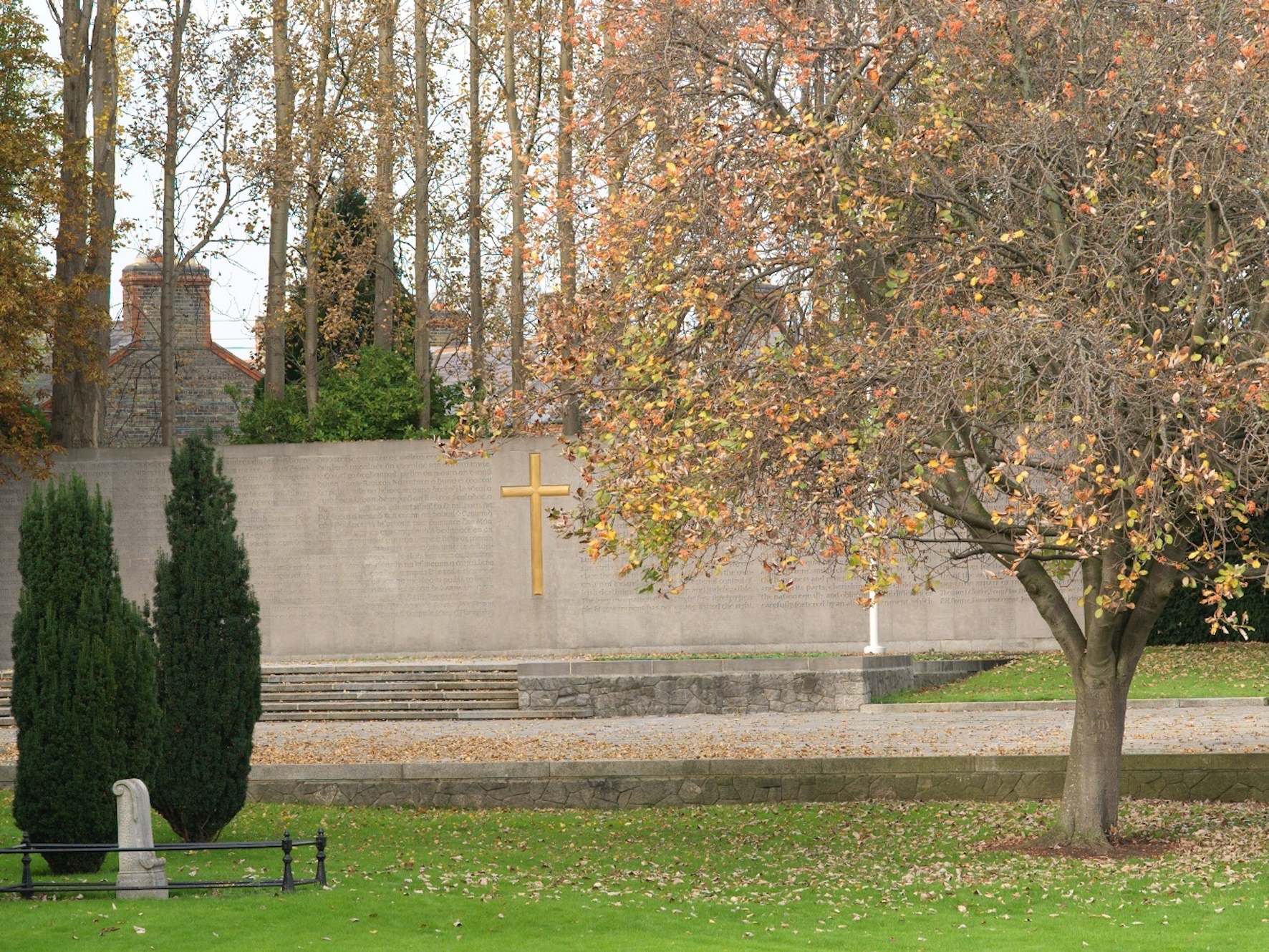
This third episode of LEGACY features three sites that are dedicated to the memory of people who lost their lives fighting for different, sometimes opposing causes. The fourth site, the JFK Arboretum, was created to commemorate President John F. Kennedy, killed by an assassin’s bullet. Arbour Hill Cemetery was a military cemetery situated close to the garrison and Royal Barracks (now the Collins Barracks), where British soldiers lived in in the 19th and early 20th centuries. It was the site where 14 of the leaders of the Easter Rising were buried, in a mass, unmarked grave, following their execution in Kilmainham Jail in May 1916.
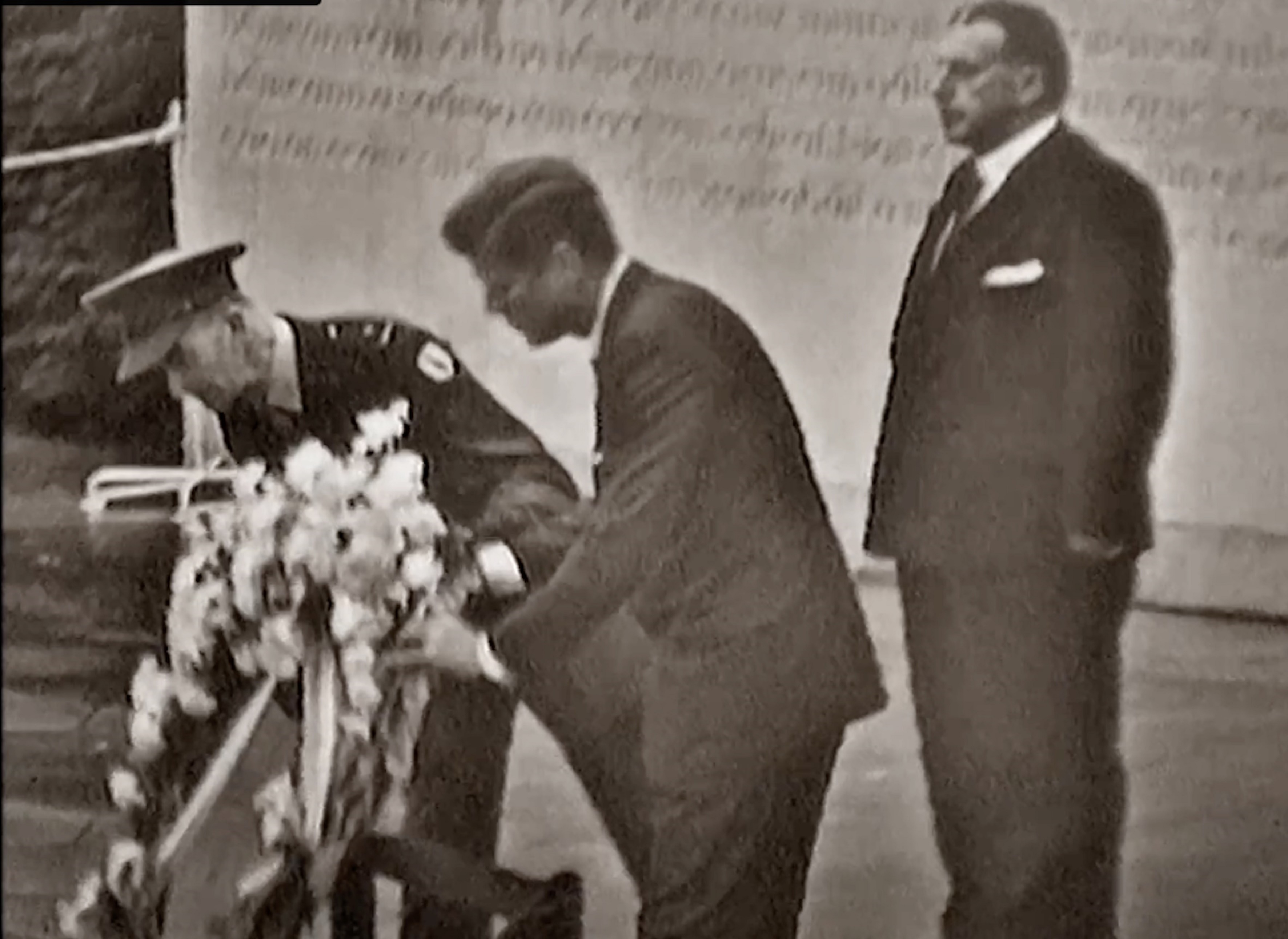
The state’s longest running service dedicated to the memory of the 1916 leaders is held at Arbour Hill every year, and is attended by the President, the Taoiseach and the Tanaiste, as well as relatives of the 1916 leaders. In 1963, President Kennedy attended a ceremony at Arbour Hill and was so impressed by the Army Cadets performing military honours that his widow Jackie requested that the Cadets perform the same drill at JFK’s funeral in November 1963. Moving archive footage shows JFK visiting Arbour Hill (the first foreign leader to do so) and the Irish Cadets at JFK’s funeral.
The Irish National War Memorial Gardens in Islandbridge, on the south bank of the River Liffey are dedicated to the memory of the Irish soldiers who died in the First and Second World Wars. The name of every Irish soldier who died (over 49,000) in the First Word War is contained in the beautifully illustrated Harry Clarke manuscripts in the granite bookrooms. Irish men and women who died in the Second World War are also commemorated here. Designed by Sir Edwin Lutyens, the Gardens were not officially opened by the State until the 1980s, despite being completed decades earlier. In the 1970s, the Gardens fell into a terrible state of dereliction.
A movement to renovate the gardens began in the early 1980s driven by public figures including broadcaster Gay Byrne and journalist Kevin Myers who believed it was imperative to honour the Irish war dead. After extensive renovations, the official opening ceremony took place in 1988.
Restored to their former glory, the sunken rose gardens, herbaceous borders and extensive tree-planting create a solemn, serene atmosphere and a perfect place in which to reflect.
The Garden of Remembrance commemorates all those who died in the fight to end British rule in Ireland, making the laying of a wreath there by Queen Elizabeth II in May 2011 especially poignant. Former President Professor Mary McAleese recalls the ceremony and reflects on its significance. The location in Parnell Square was controversial, but had historic validity.
A prominent statue of the Children of Lir by Oisín Kelly depicts the themes of rebirth and resurrection. The Garden was opened by President Éamon De Valera in 1966 as part of the commemorations of the 50th anniversary of the Easter Rising, in which he had been a Commander.
The JFK Arboretum was created to remember an American President who was proud of his Irish ancestry. All eight of his great-grandparents had been born in Ireland, an unusually strong connection among Irish-Americans.
The John F. Kennedy Arboretum near New Ross, Co. Wexford covers 653 acres and contains thousands of trees and shrubs from around the world. The Arboretum has a serious scientific purpose, and is a place where botanists and horticulturalists can study trees over long periods of time.
But it was initially created to act as a lasting memorial to the life of John F. Kennedy. In 1963, just months before he was assassinated, President Kennedy had visited the Kennedy family homestead in Dunganstown, Co. Wexford, a pivotal moment of his official visit to Ireland. Opened in 1968, the purpose of the Arboretum is to celebrate John F. Kennedy’s life and significance to Irish-American history and provide a collection and trial ground for growing forest trees. Twenty two countries sent seeds, seedlings and trees that could be planted, giving the Arboretum an international flavour and offering extraordinary botanical knowledge and information.
LEGACY is produced and directed by David Hare for InProductionTV and made with the support of the Office of Public Works
Press enquiries: TVPR Pauline Cronin 087 2629967




LEGACY is produced and directed by David Hare for InProductionTV and made with the support of the Office of Public Works
Press enquiries: TVPR Pauline Cronin 087 2629967