


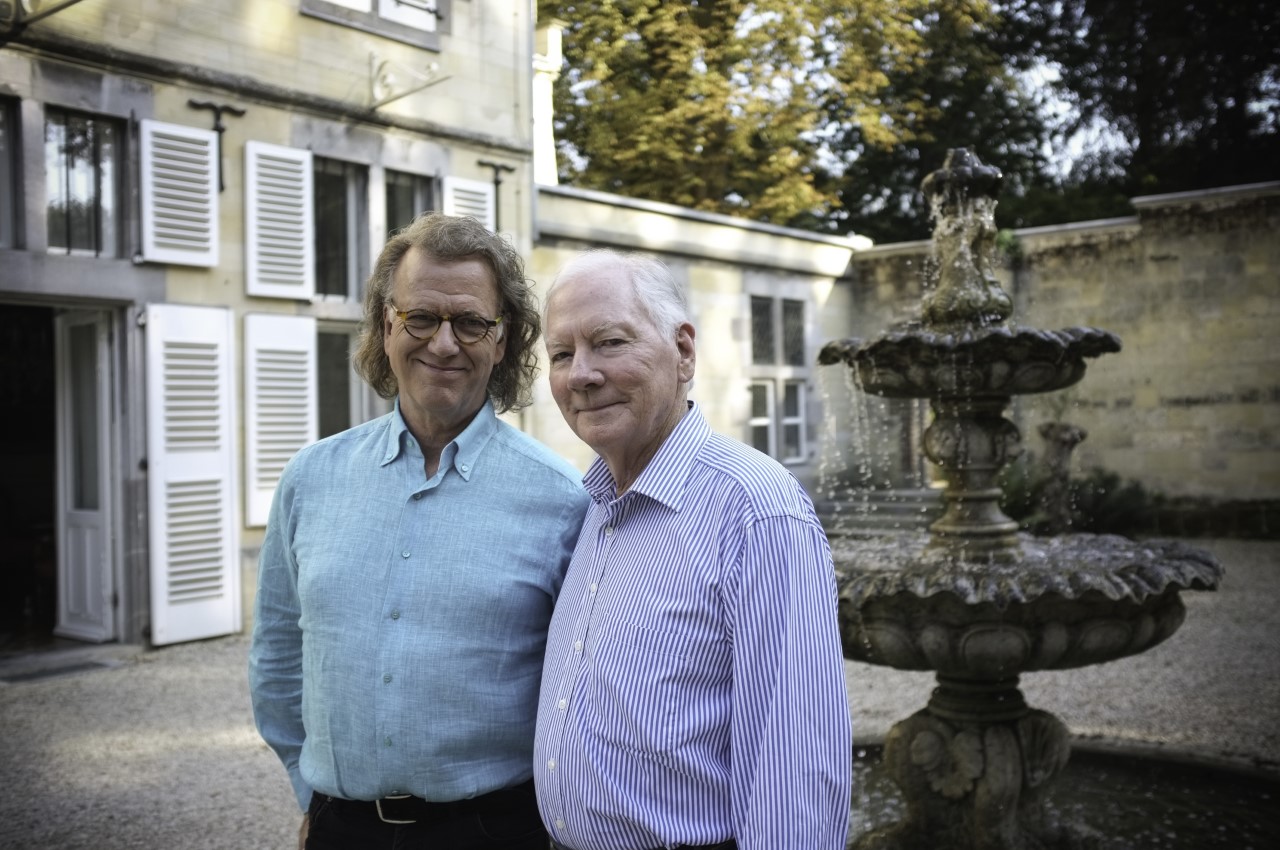
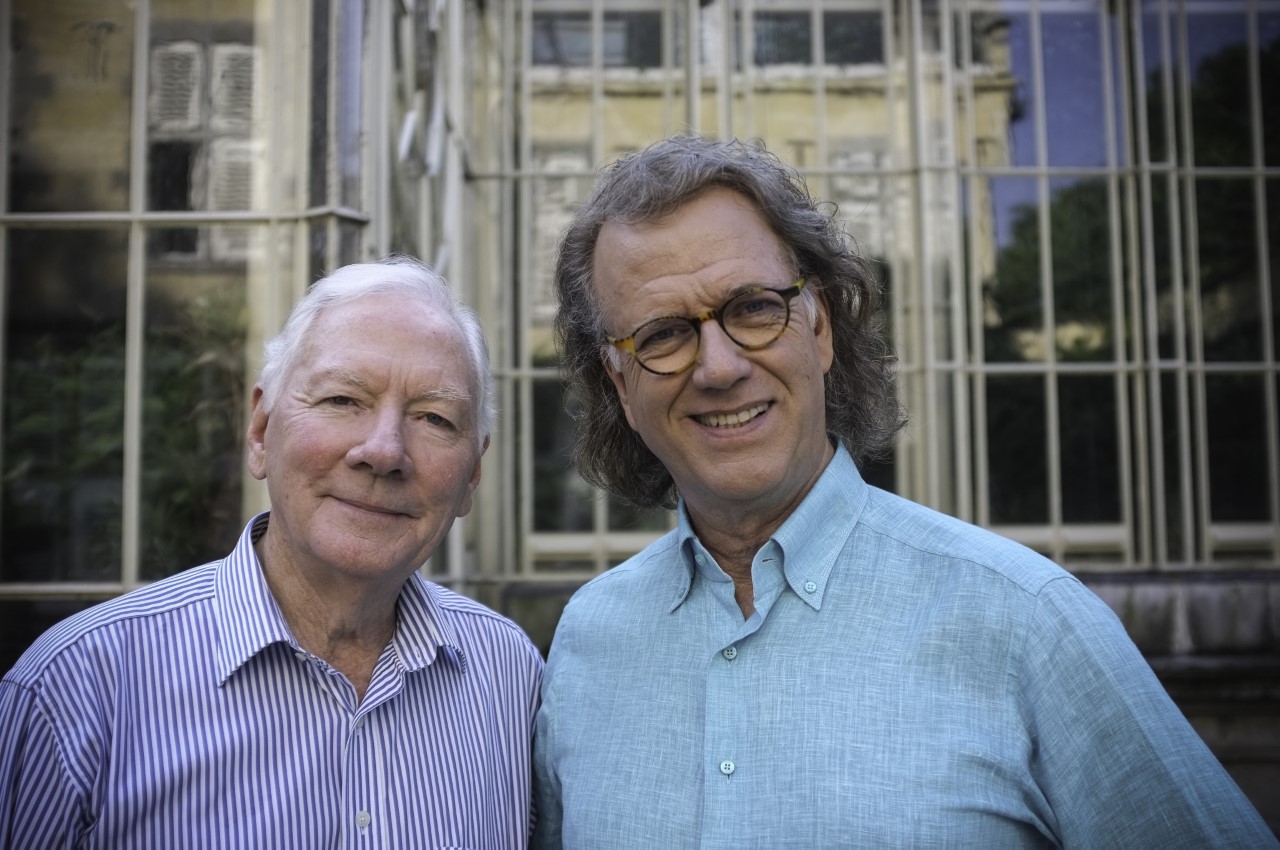

Christened “The King of the Waltz” by the media, André Rieu has single-handedly revived the popularity of the waltz on the global music scene. As Gay Byrne puts it, at the start of this Special episode of The Meaning of Life, with Gay Byrne, recorded in the Maestro’s castle home, in Maastricht, the Dutch Master Showman “has done for the waltz what Thomas Edison did for electricity: he may not have invented it, but man, can he light up a room.”
The sheer scale of Rieu’s concerts, with armies of musicians, singers and dancers, in period costume, on lavish theatrical sets, has delighted audiences internationally and made him, in terms of tickets, albums and DVD sales, one of the world’s most successful performers. The formula is simple. As he tells Gay, “I make music. And I make a lot of people happy in the world… I think.”
Although André embraces all his audiences, he reveals that he has a particular affection for his Dublin fans, because they get into the spirit of his shows: “You can ask everybody. Dublin audiences [are] the best in the world.”
For all his present-day sunny disposition, Rieu reveals a strict and severe upbringing, which he was only too happy to put behind him. Introduced to the violin at 5 by his father, the symphony orchestra conductor, André Rieu Senior, he was, like his five siblings, relentlessly drilled in classical music until his twenties. He learned not only the violin, but the oboe, recorder and piano, as well as singing two Masses a week as a chorister in the local basilica. The swinging sixties swung by without him noticing, as he practised for hours at a stretch, winning the top prize at his conservatoire in Brussels. And yet, for all that dedication and achievement, his father never praised his skill or told him that he loved him. And sadly, he didn’t live to see his son’s glittering global success. Instead, it was left to André’s childhood sweetheart and now wife, Marjorie, the love of his life, to give him the affirmation, love and encouragement he needed to fulfil his dreams. They remain an inextricable double act in every aspect of his multi-million Euro act and business, although she is happy to let him take all the limelight and applause.
André recounts to Gay first seeing his wife when he was 13 years old, but it wasn’t until later, when he was away at college, that they started to exchange letters and fell in love. Although they came from two very different religious backgrounds – his, strict Catholic and hers Orthodox Jewish – they married within nine months of becoming a couple, against the wishes of her father. They then tried to make up for lost time, having the adolescence they had missed out on.
“Yeah, because my wife, as I told you, had a very severe education – me, too – we were always working or studying. And we never had our puberty. So, we decided to have our puberty together [in their twenties!] and we did it within three weeks. So, I can tell everybody: when you don’t have it, do it. And even when it’s too late, it’s okay. But do it.”
He tells Gay that he firmly believes there is one person for everyone, “From the moment Marjorie came into my life, I found somebody who thought that I was worth to love… She believed in me.” Both rebelled against their strict upbringings and freedom and happiness remain their primary focus in life. There’s little or no sign of the religion of André’s youth… unless you count his cloister – “my nunnery” – which, as he shows Gay, he is building in the grounds of his castle. Where once he might have prayed, he says he now talks to Marjorie… or plays his violin, convinced that music can be a type of prayer, even if he’s no longer sure that there’s a God listening.
Having been to the brink of bankruptcy, losing millions on an eye-wateringly extravagant touring show – 120 containers on the road, worldwide, to re-create Vienna’s Schoenbrunn Palace on stage – André is now philosophical about money. “Money is freedom.” That said, he relates how his operation costs “a million a month, even when I am not working,” because of the 110 people on his pay roll. Not that that responsibility seems to trouble him. He’s equally good at the music and business sides of the music business and believes passionately that more musicians should be taught, not just how to play, but how to make a living out of playing.
For him, though, the secret of success is not wealth. It’s the same as the meaning of life: live life to the full and make people happy. “Try to make the best of it, now and here. That is, for me, the meaning of life. And try to make each other happy.”
You can guarantee that he’ll be doing just that, at 10.30pm, on Sunday 30th October, on RTÉ One, and then when he returns to Ireland to play live, at Dublin’s3 Arena, on 8th December.
For further information:
Fergus McCormack: Fergus.mccormack@rte.ie / 086 8674751